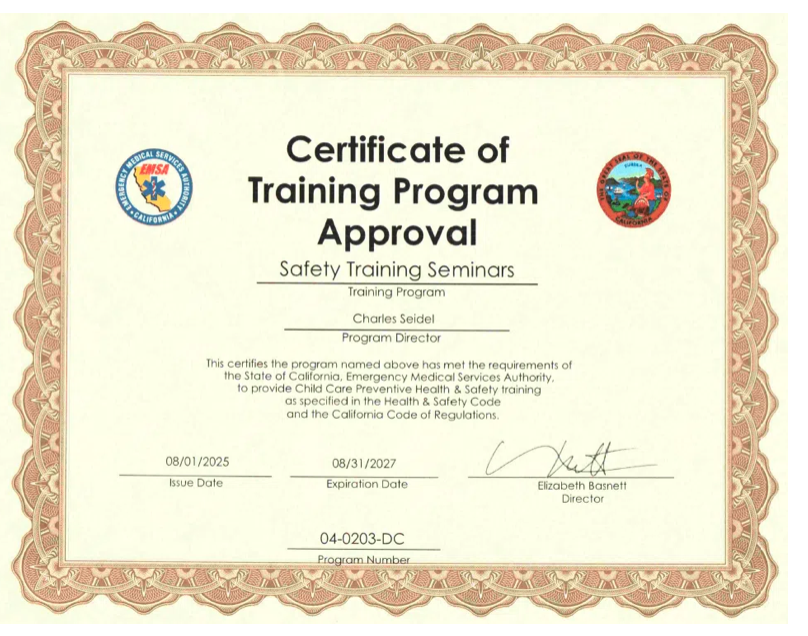
Understanding EMSA Childcare Health and Safety Training
EMSA Preventive Health and Safety training focuses on practices that help childcare providers maintain healthier environments for young children. The curriculum addresses everyday responsibilities, including preventing infectious diseases, maintaining appropriate hygiene, recognizing potential health concerns, and reducing childhood injury risks.
For childcare professionals, this knowledge extends beyond responding to emergencies. It includes establishing routines that reduce exposure to illness, keeping children’s health records organized, reviewing relevant medical information, and following appropriate procedures when a child becomes sick.
California’s preventive health requirements also address childhood nutrition and lead exposure prevention. These subjects help providers understand how daily childcare practices can affect children’s well-being.
The California Childcare Health Program’s Preventive Health Training resources provide additional information about the curriculum used in EMSA-approved training programs.
California Childcare Licensing Requirements and Preventive Health Practices
California regulates licensed childcare through the California Department of Social Services and its Community Care Licensing Division. Health and safety training requirements depend on factors such as the provider’s role, facility type, licensing circumstances, and applicable regulations.
California Health and Safety Code Section 1596.866 addresses health and safety training for specified childcare personnel. Its provisions include pediatric first aid, pediatric CPR, preventive health practices, and childhood nutrition training where applicable. Lead exposure prevention is also addressed in the relevant requirements. California Department of Social Services provides training and educational resources for childcare providers.
Preventive Health and Safety training should not be confused with pediatric CPR and First Aid training. These are related but distinct training components, and completing one does not automatically establish that every other requirement has been met.
Childcare professionals in Vallejo should check current Community Care Licensing guidance to determine which courses apply to their circumstances.
What Does the Preventive Health and Safety Course Cover?
The training addresses practical issues that arise in childcare environments, from daily cleaning routines to children’s medical and nutritional needs.
- Infectious disease prevention: Appropriate handwashing, hygiene, sanitation, and other practices help reduce the spread of illness.
- Childhood injury prevention: Providers learn to recognize age-related hazards and consider safety in indoor spaces, outdoor play areas, and childcare activities.
- Health records and medical information: Understanding relevant records, allergies, medications, and immunization information helps providers follow established childcare procedures.
- Environmental sanitation: Safe cleaning practices, kitchen hygiene, toilet sanitation, and diaper-changing procedures help maintain a healthier setting.
- Emergency preparedness: Appropriate procedures help staff understand their responsibilities when a child becomes ill or injured.
- Preventive health practices: Daily observation and consistent routines support early recognition of potential health concerns.
These topics are relevant to both small home-based childcare operations and larger centers. The aim is to help providers apply health and safety principles consistently rather than rely only on reactive measures.
Lead Poisoning Prevention for Vallejo Childcare Providers
Lead exposure is an important consideration in early childhood because young children are particularly vulnerable to its harmful effects. Exposure may occur through contaminated dust, soil, deteriorating lead-based paint, or other sources. Children may be exposed without showing obvious symptoms.
Childcare providers can help reduce potential risks by maintaining clean play areas, following appropriate cleaning procedures, preventing children from accessing suspected hazardous materials, and communicating concerns to the appropriate adults.
Vallejo childcare operators should consider the condition and maintenance of their facilities when reviewing environmental health practices, particularly in older buildings where lead-based paint may be a concern. This does not mean that a particular building contains lead; potential hazards require appropriate assessment.
California’s childcare lead prevention resources explain the issue and provide guidance for providers. Review the California Department of Public Health’s Child Care Lead Poisoning Prevention resources for further information.
Lead poisoning prevention is also part of the broader preventive health education relevant to California childcare licensing.
Nutrition and Children’s Health in Childcare Settings
Nutrition is another important area of preventive health education. Childcare professionals often help organize meals and snacks, monitor children’s eating routines, and communicate with families about dietary needs.
Age-appropriate meal planning helps providers consider children’s nutritional needs and suitable food portions. Food allergies require careful attention to documented instructions and established procedures for avoiding exposure. Children with diabetes or other medical needs may also have specific dietary considerations that providers must understand and follow within their responsibilities.
Feeding difficulties and concerns about growth can require communication with parents or guardians and appropriate healthcare professionals. Childcare staff are not expected to diagnose medical conditions, but they should know when to document observations and raise concerns.
Dental health also connects with nutrition. Appropriate food choices, regular oral hygiene routines where applicable, and communication with families can support children’s developing teeth.
For childcare professionals in Vallejo, these subjects are useful when creating daily routines that support children’s health while respecting individual family needs.
Who May Benefit From EMSA Training in Vallejo?
EMSA Preventive Health and Safety training may be relevant to several groups involved in caring for young children.
Family Child Care Home providers may need to understand preventive health practices while managing daily routines in a home-based setting. Their responsibilities can include food preparation, diapering, cleaning, health record management, and maintaining safe play areas.
Child Care Center directors and teachers may benefit from structured training on sanitation, infectious disease prevention, injury prevention, and children’s nutritional needs. The course can also help staff understand their responsibilities within the center’s health and safety procedures.
Prospective childcare professionals can explore the course while preparing for employment or a childcare business. However, completing the course alone does not guarantee employment, satisfy every licensing requirement, or replace other required training.
Existing childcare staff and operators may use preventive health education to review their practices and identify areas where additional learning is appropriate.
Because requirements vary, each learner should confirm the applicable course and completion documentation before enrolling.
Finding Childcare Health and Safety Classes Near Vallejo
Vallejo’s position in Solano County makes it a practical location to consider for childcare professionals from nearby communities. Depending on their location and travel arrangements, learners from Benicia, American Canyon, Fairfield, Suisun City, and surrounding areas may also consider the Vallejo training option.
The local education environment includes institutions such as Solano Community College’s Vallejo campus, while the wider community includes healthcare facilities such as Sutter Solano Medical Center and Kaiser Permanente’s Vallejo medical campus. These organizations form part of the city’s broader education and healthcare environment; their mention does not imply a partnership with or endorsement of Safety Training Seminars.
For childcare providers searching online for EMSA training near Vallejo, choosing a location in the city may make it easier to explore course options without beginning their search in another part of the Bay Area.
Safety Training Seminars in Vallejo, CA
Safety Training Seminars provides a local option for people seeking childcare-related health and safety education in Vallejo. The training center is located at:
Safety Training Seminars 1006 Marin Street, Suite 107 Vallejo, CA 94590
Childcare professionals can use this location when exploring available EMSA Preventive Health and Safety courses. Before making plans, review the provider’s course information to confirm the specific program, registration requirements, upcoming dates, and completion documentation.
People who also need pediatric CPR and First Aid should check those course offerings separately. Selecting the correct combination of training can help learners address their professional development needs and applicable childcare licensing requirements.
What to Know Before Registering
Before enrolling in an EMSA Preventive Health and Safety course in Vallejo, consider these steps:
- Identify your training requirement. Determine whether you need Preventive Health and Safety education, pediatric CPR, pediatric First Aid, or a combination of courses.
- Check the course details. Confirm that the particular offering meets the requirements applicable to your role and facility.
- Review registration information. Check the current schedule, format, fees, and enrollment instructions directly with Safety Training Seminars.
- Understand completion documentation. Ask what documentation is issued after successful completion and whether it satisfies the requirement you need to meet.
- Verify current regulations. Consult California Community Care Licensing if you are unsure which training requirements apply to your situation.
Taking these steps can help childcare providers avoid enrolling in a course that does not meet their specific needs.