If your job puts you near crowds, rides, docks, or open water in Vallejo, California, the CPR class you need may not be the same one your coworker in an office down the street needs. Employees at Six Flags Discovery Kingdom, marina staff around Mare Island, and workers at Vallejo’s waterfront businesses often fall into a gray area between basic workplace CPR and the higher-level training expected of lifeguards, ride operators, or first-response staff. Before enrolling in anything, it helps to know which certification your role actually calls for, what a BLS class covers that a general CPR class does not, and where to complete training locally. This article walks through both, using Vallejo’s own workforce as the reference point.
Key Takeaway: Most theme park and waterfront jobs in Vallejo call for either a Heartsaver-level CPR/First Aid course or a BLS (Basic Life Support) course, depending on whether the role involves direct patron safety, water access, or medical response duties. Checking with your employer or HR department before registering is the fastest way to avoid taking the wrong class.
Why Your Job Description Determines Which Course You Need
Not every workplace certification is interchangeable, even though “CPR class” gets used as a catch-all term. Heartsaver CPR/First Aid, developed for laypeople and workplace responders, covers adult, child, and infant CPR, choking response, and basic first aid. BLS (Basic Life Support) is built for people who may be expected to respond as part of a coordinated team, and it adds two-person rescuer skills, use of a bag-valve mask, and team dynamics during resuscitation.
At a theme park like Six Flags Discovery Kingdom, ride operators, guest services staff, and retail employees are typically directed toward Heartsaver-level training, while lifeguards, first-aid station staff, and anyone working around the park’s marine animal exhibits are more often required to hold BLS. Waterfront workers around Mare Island fall into a similar split: dock and facilities staff may only need general CPR/First Aid, while marina safety personnel or anyone with lifeguard-adjacent duties are frequently asked for BLS. Your employer’s job description or HR policy is the authority here, not a general guideline.
What Working Near Water or Large Crowds Adds to the Equation
Drowning and cardiac emergencies both require immediate, correct action, but the setting changes what a responder needs to be ready for. Someone pulled from the water may need rescue breathing before compressions, and crowded environments mean bystanders often reach a victim before trained staff do, which makes clear communication and quick handoff part of the skill set.
BLS training addresses this directly by including scenario-based practice on team response, not just solo rescuer steps. If your role involves being first on scene at a marina, a dock, or a high-traffic guest area, this is usually the layer of training that separates BLS from a general consumer CPR class.
What Actually Happens in a BLS Class
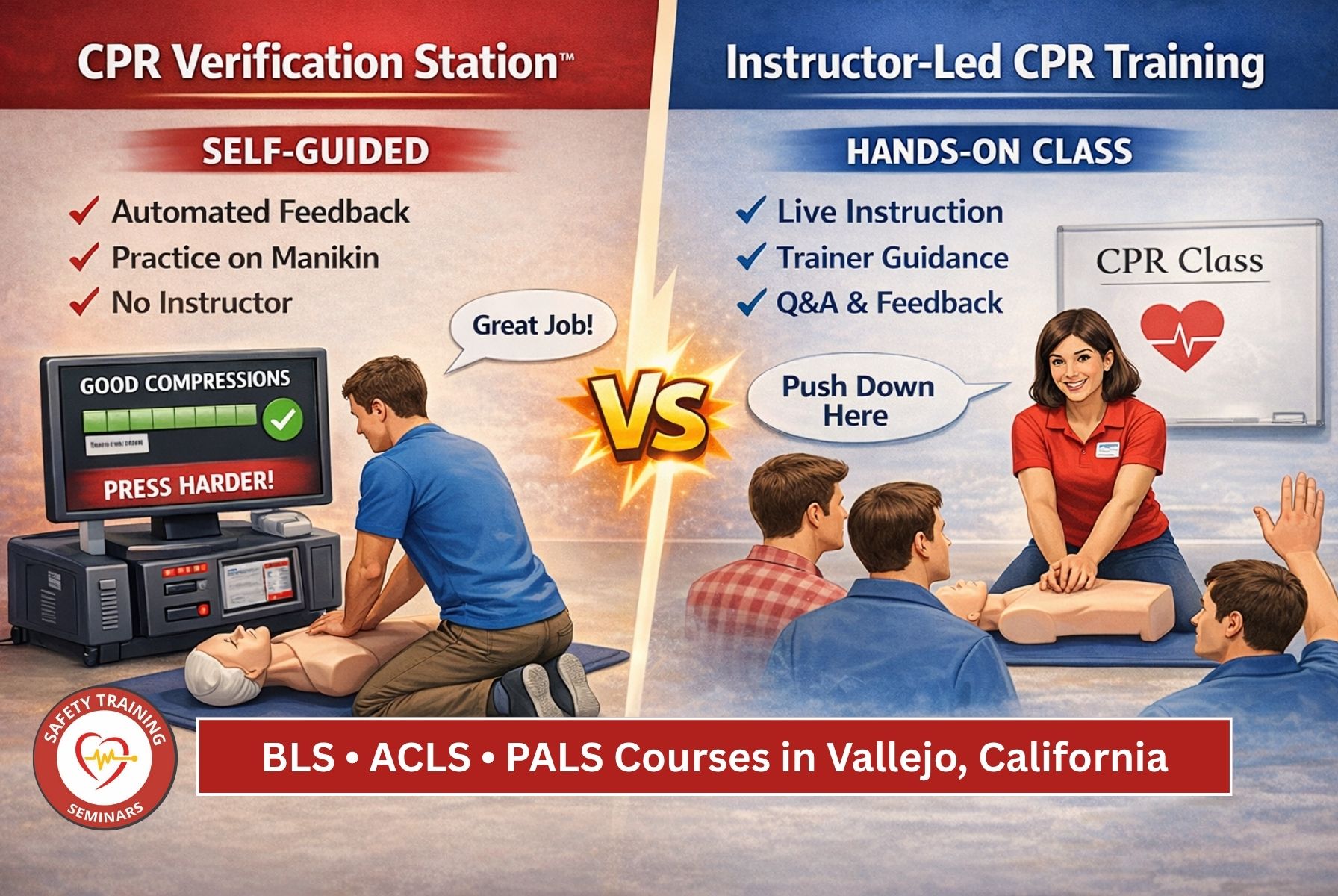
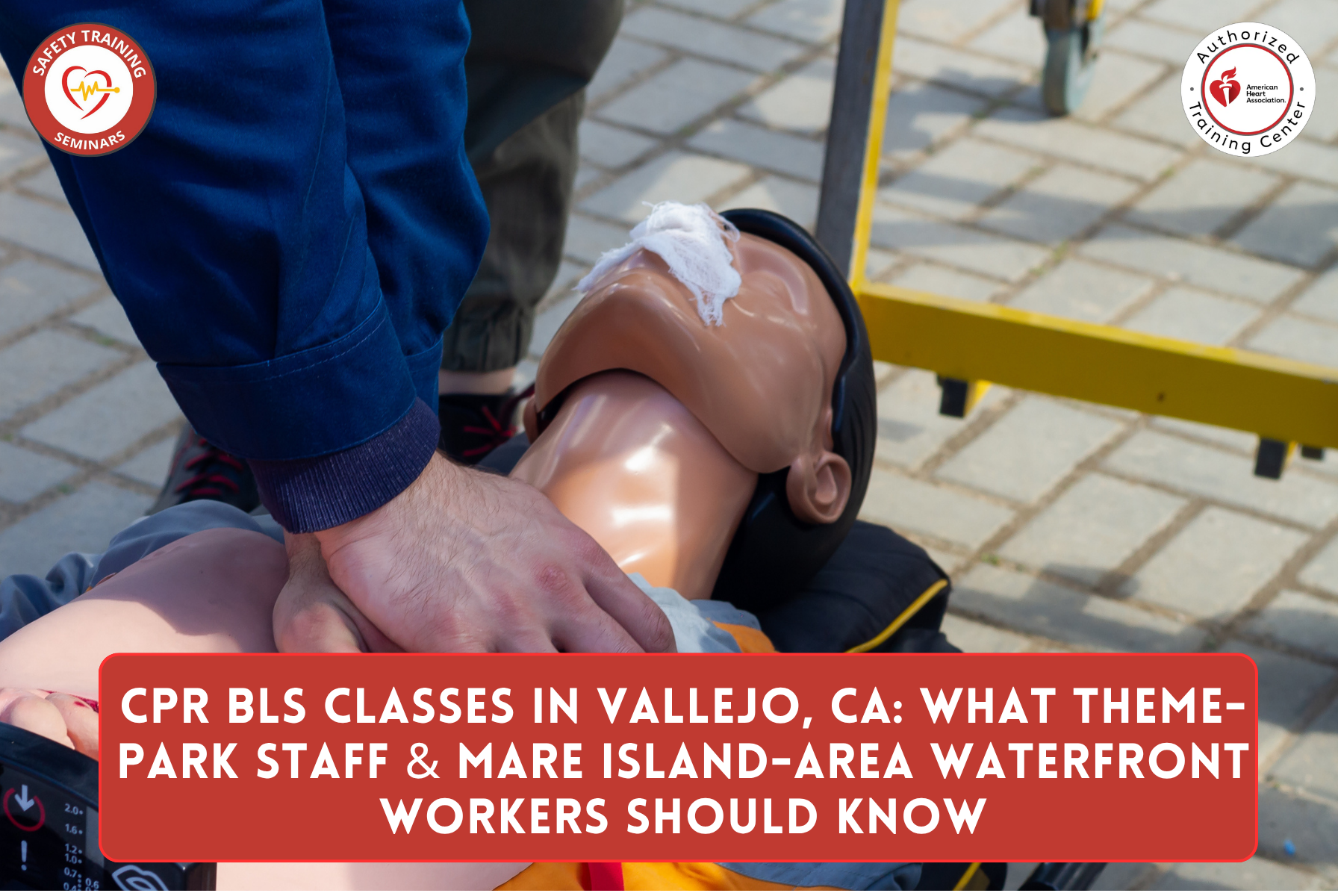
A BLS course combines instructor-led lecture with supervised hands-on practice on a training manikin. Expect coverage of high-quality chest compressions, rescue breathing, AED use, relief-of-choking techniques for adults and infants, and two-rescuer CPR scenarios. Most courses end with a skills evaluation and a written or online knowledge check.
Bring comfortable clothing you can kneel and move in. Some providers ask students to complete a short online segment before attending the in-person skills session, so confirm the format when you register rather than assuming it is fully in-person.
Online-Only, Blended, and In-Person Formats Are Not All Treated the Same
A certificate earned through an online-only course, with no hands-on skills check, is not accepted by every employer for BLS purposes. Many workplaces, hospitals, and licensing boards specifically require an in-person or blended format that includes supervised skills testing on a manikin, because BLS is a physical, team-based skill that cannot be fully verified through video alone.
If your employer has not specified a format, ask directly before registering. This single question prevents the common problem of completing a course that ends up not satisfying a job or school requirement.
Serving Vallejo’s Waterfront and Entertainment Workforce
Vallejo’s job market includes a mix that many nearby Bay Area cities do not: a major theme park, an active waterfront around Mare Island, and marina and marine-adjacent businesses along the Napa River and Carquinez Strait. That combination means CPR and BLS demand here is shaped as much by tourism and water access as it is by traditional healthcare employers.
Workers who split shifts between Vallejo and nearby communities also have options. Employees commuting from Benicia or attending BLS and ACLS training while working in Fairfield can review the CPR and ACLS class schedule for Fairfield-area workers if a Vallejo class time does not fit their shift. The same applies to staff based farther out in Solano County, including those checking CPR, BLS, and ACLS course options in Suisun City or Rio Vista before committing to a specific date.
Where to Complete BLS CPR Certification in Vallejo
Safety Training Seminars operates a Vallejo training location at 1006 Marin Street, Suite 107, Vallejo, CA 94590. The center offers BLS CPR certification courses along with related CPR, First Aid, ACLS, PALS, and NRP training, which gives theme park staff, marina and waterfront employees, and healthcare workers in the area a local option rather than driving into a neighboring county.
For employees weighing BLS against a Heartsaver-level CPR/First Aid course, reviewing the current course descriptions before registering is worth the extra few minutes, since the two are not interchangeable for most employer requirements. Vallejo-based staff, along with those coming from Benicia, Fairfield, or Suisun City, can compare the local course-location pages listed here to confirm which certification, format, and schedule fit their job before signing up.
Frequently Asked Questions
Do theme park employees at Six Flags Discovery Kingdom need BLS or regular CPR certification? It depends on the role. Guest-facing and retail staff are commonly directed toward Heartsaver-level CPR/First Aid, while lifeguards, first-aid station staff, and employees working around water attractions are more often required to hold BLS. Confirm the exact requirement with your supervisor or HR department, since policies vary by department and employer.
Is an online-only CPR certificate accepted for waterfront or marina jobs in Vallejo? Many waterfront employers require a hands-on skills check in addition to any online coursework, since BLS and CPR are physical skills. An online-only certificate without an in-person or blended skills evaluation is often not sufficient for these roles. Verify the accepted format with your employer before registering.
How long does a BLS class in Vallejo typically take to complete? Class length varies by provider and by whether the course is fully in-person or blended with an online component. Contact the training provider directly to confirm current course length and scheduling before enrolling.
Can I attend a Vallejo CPR or BLS class if I work in a nearby city like Benicia or Fairfield? Yes. Many students commute from surrounding Solano County communities for training. If a Vallejo class time does not match your schedule, checking course-location pages for nearby cities such as Benicia or Fairfield can help you find an alternate date or location.
What should I bring to a BLS skills session? Wear comfortable clothing that allows you to kneel and move freely, since the class includes hands-on practice on a training manikin. Bring identification if required by the provider, and confirm ahead of time whether any online prerequisite must be completed before you arrive.
Making the Right Call Before You Register
Theme park staff and waterfront workers in Vallejo are not always covered by the same CPR requirement, so the most useful first step is confirming with your employer whether your role calls for Heartsaver-level CPR/First Aid or full BLS certification. From there, format matters: in-person or blended courses with a hands-on skills check are what most employers in these settings expect. Safety Training Seminars’ Vallejo location on Marin Street offers BLS and related certification courses for local workers, and reviewing the course-location pages for Vallejo and nearby Solano County cities before you register is the simplest way to make sure you sign up for training that actually satisfies your job’s requirement.